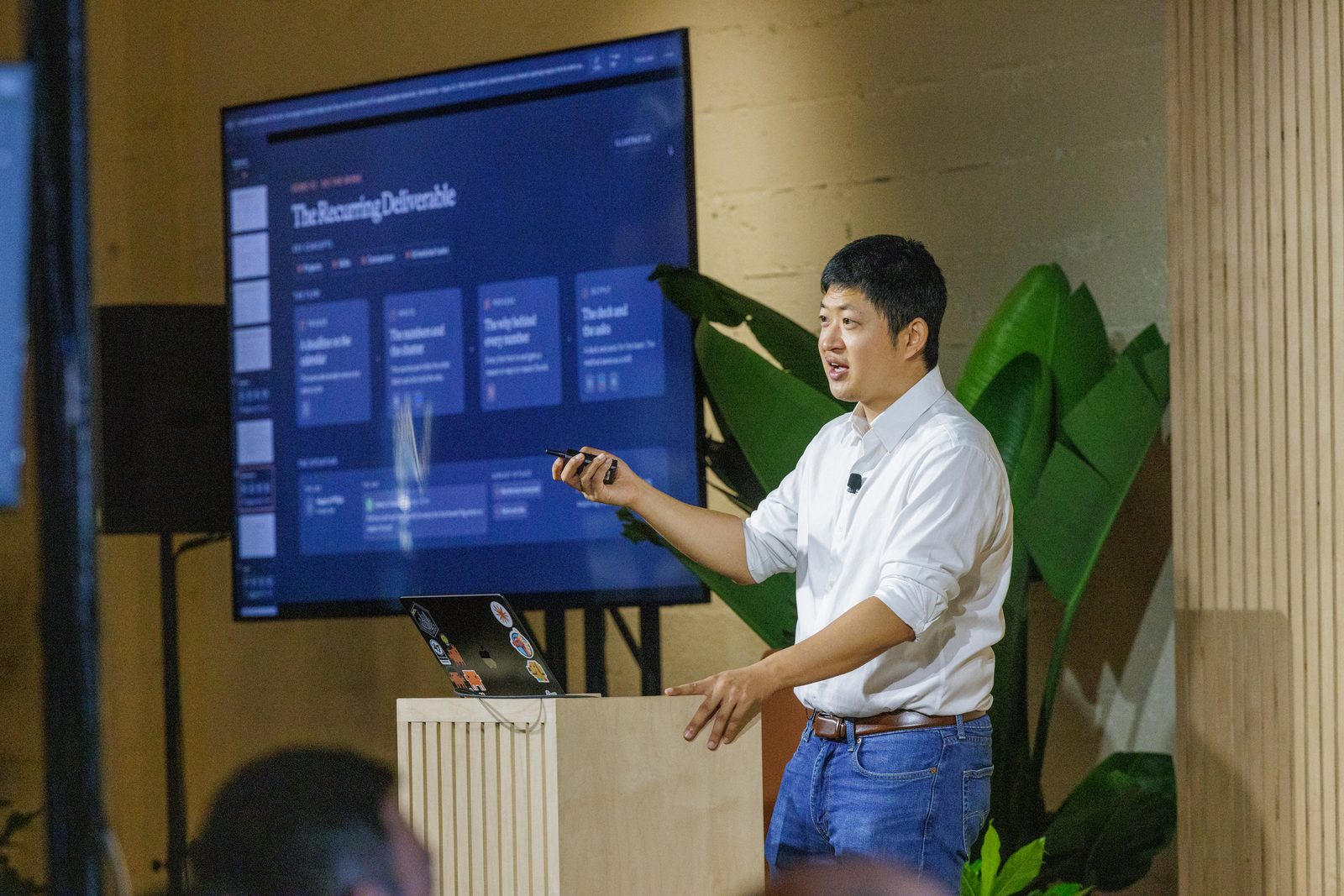
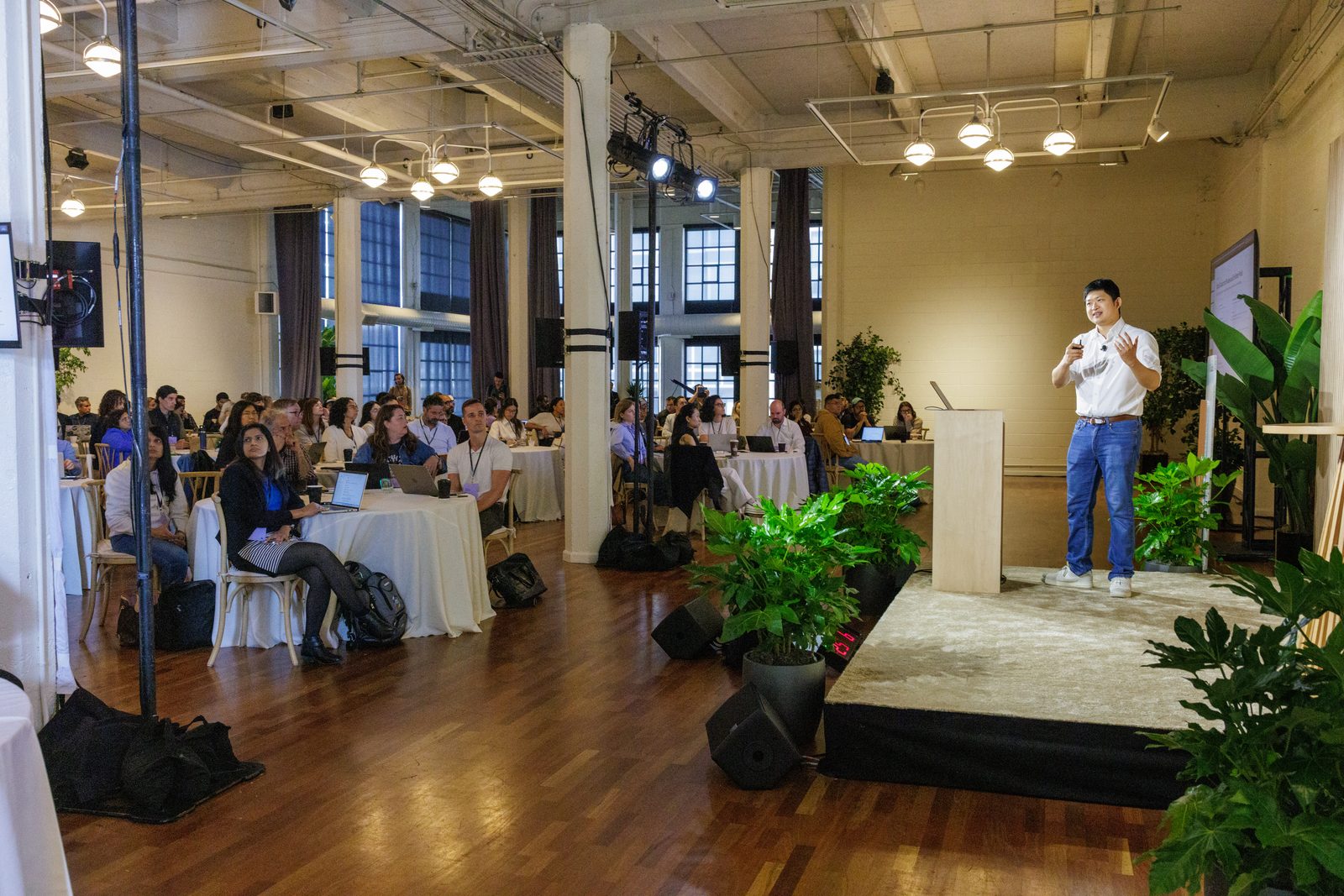
I led Anthropic's first Claude Coworkshop in San Francisco: 270 executives across tech, finance, healthcare, semiconductors, consumer, and a dozen other industries, spending a morning on AI automation and building agents. Most had never written a line of code. By the end of the first hour, all of them had built an agent.
They are also being asked some version of the same question by their boards: what's our AI strategy? Very few companies have a good answer. Unlike cloud or mobile, AI is not optional, regardless of industry. It also cannot be delegated to engineering or treated as an R&D tool. It changes how every function works.
To be clear, I don't think AI will replace most businesses. But I am increasingly convinced that companies that fail to transform themselves with AI will be replaced by competitors and startups that are more AI-native.
I spend a lot of time helping leaders think through that transformation. The more I do, the more convinced I am that the bottleneck is not just technical capability. It is having the right mental model for applying it.
Here's the one I shared with the room.
Three ways to think about AI
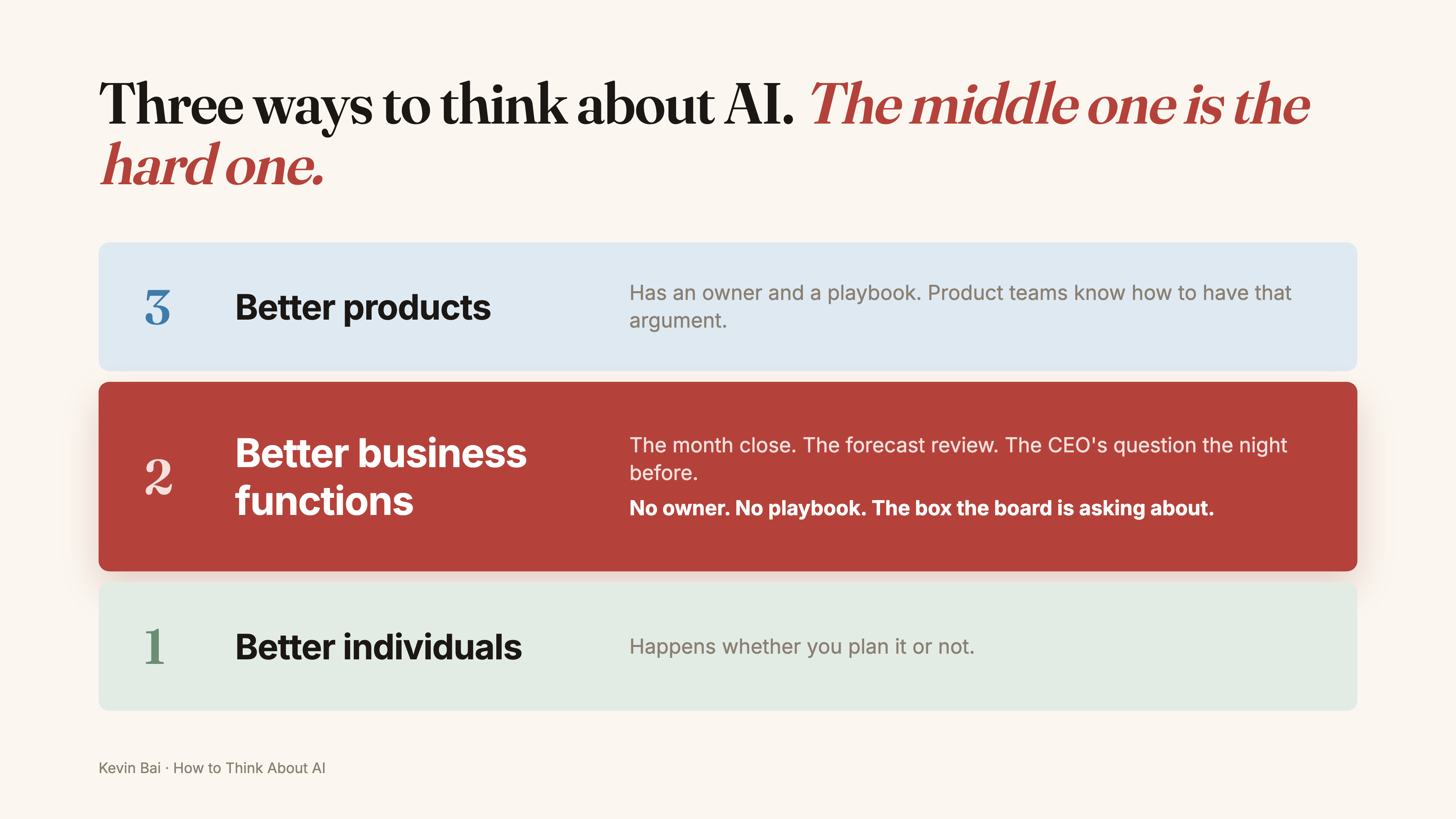
Almost every AI conversation I have with a leader falls into one of three buckets: make individuals more productive, make business functions run better, and build better products.
The first is already happening whether companies plan for it or not. Every professional is figuring out how to use AI for their own work. The third has an owner. Product and engineering teams already know how to have that conversation.
The middle is harder. It cuts across finance, operations, legal, HR, sales, and every other function. Nobody clearly owns it, there is no established playbook, and it is often what the board is really asking about.
This essay is about the middle.
A business function is the month-end close, the weekly forecast review, or the request from the CEO that lands the night before the meeting. Improving those workflows is not mainly about learning a new technology. It is about managing a very fast, very literal new employee who has read everything and decided nothing. Every executive in that room has done that before.
It comes down to three things: brief the agent well, decide on what comes back, and make the second time free.
Brief it like you'd brief a person
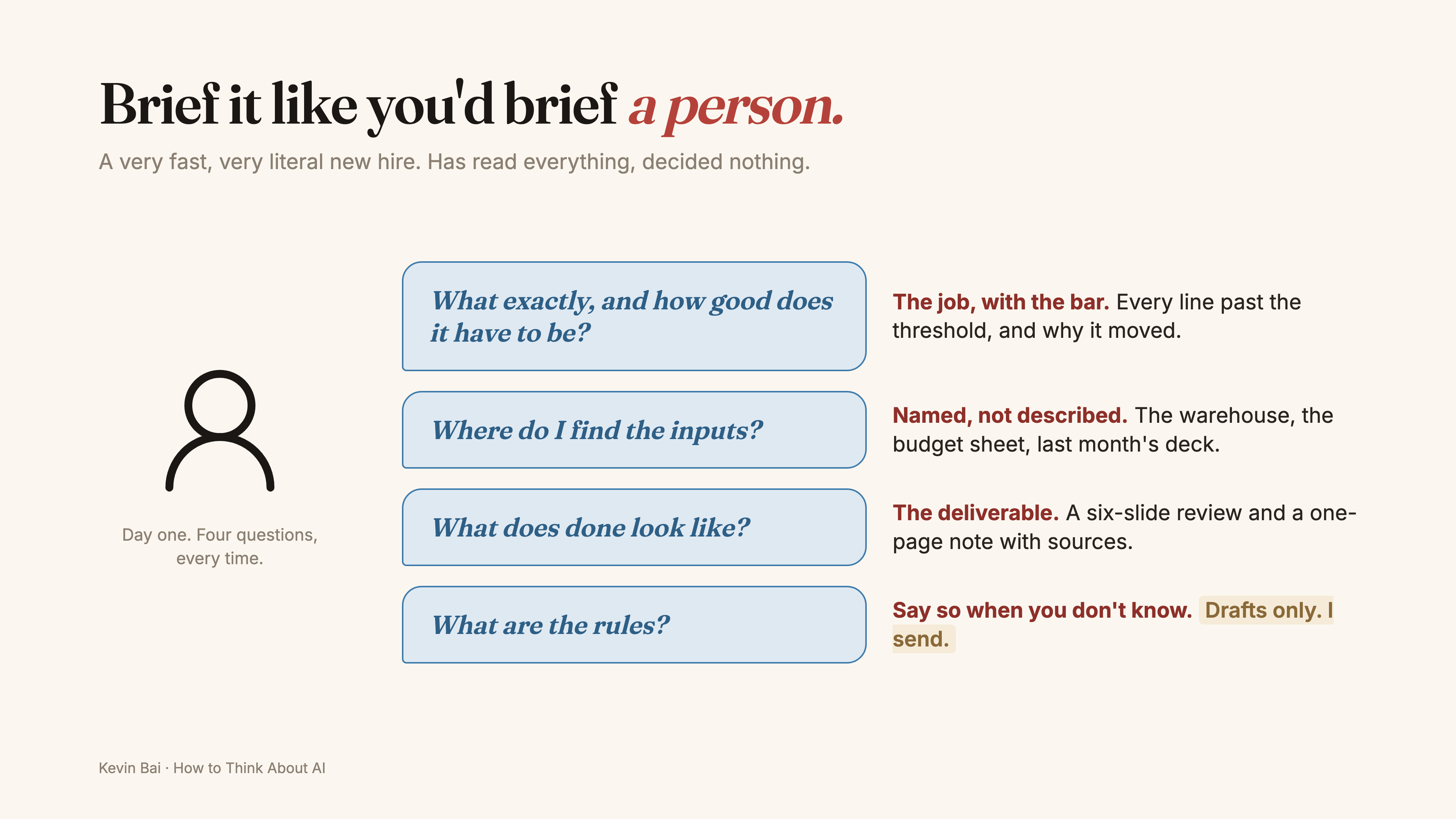
Most people type into AI like they are using a search box, then judge the technology by the answer. The people who get real work out of it brief it like a new employee.
Give it the full context. Tell it what you want, where the inputs live, what good looks like, and the rules of engagement. The more relevant context it has, the better it can do the job.
This is no different from onboarding a teammate. You would not ask someone to do a finance review without access to the numbers or manage a customer without access to the CRM. The same is true for an agent.
That is why connectors and MCPs matter. They give the agent access to the systems where the work already lives: your files, CRM, knowledge base, and internal tools. Better context produces better work, and connected context means you do not have to rebuild it every time.
Two rules matter most.
Tell it what to say when it doesn't know. Left alone, it may fill the gap the way a nervous new employee does. Tell it to say "no reason found" and it will. That sentence is better than a confident paragraph.
Drafts only. You send. Nothing leaves your name without your eyes on it. That rule builds more trust than almost any policy document.
A prompt is a question. A brief is a job. Give it jobs.

It assembles. You decide.
An agent can read across six systems and assemble the page before your team has opened the first one. What it cannot do is know what you know.
It does not know that the person who said yes is not the person who signs. It does not know that a campaign was paused for reasons that never made it into a document. It does not know the judgment and context that live in your head.
So it assembles. You decide.
You correct it like you would a new employee, and the work gets better. Every time something left the building that morning, a human pressed send. Not once did the software send on its own.
If that sounds like management, it is.
Make the second time free
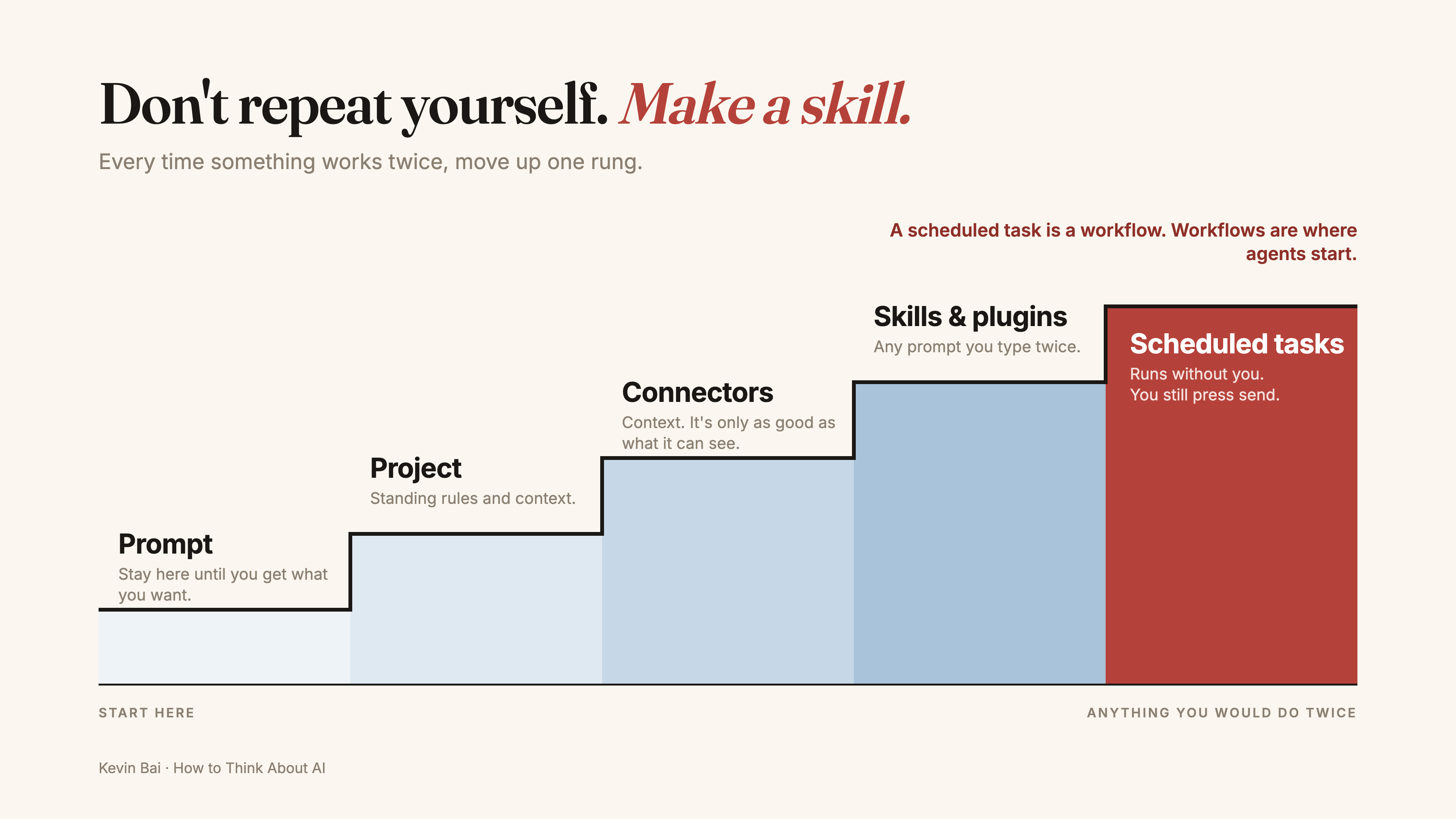
The people who get the most leverage from AI do not stop when something works. They ask how to make sure they never have to do it by hand again.
- Start with prompts. Stay there until you get what you want. Once a prompt works reliably, harden it into a skill.
- Turn skills into plugins. Group related skills together so the agent has a reusable way to do that class of work.
- Then automate the workflow. Connect the agent to the systems where the work already lives and put it on a schedule.
Prompts become skills. Skills become plugins. The work becomes repeatable.
At that point, your job starts to change. You are no longer doing every step yourself. You are building and managing the agent that does the work. AI is not just helping you finish a task faster. You are turning the way you work into something reusable and letting the agent run it again and again.
The work does not disappear. The month still closes. The CEO still asks for the impossible the night before. What changes is what you spend your time doing. The agent can gather the information, assemble the first draft, and run the repeatable parts of the process. Your time moves to judgment: deciding what matters, making the call, and owning the outcome.
The goal is not to remove people from the work. It is to move people to the part of the work where they are most valuable.
What the room taught me
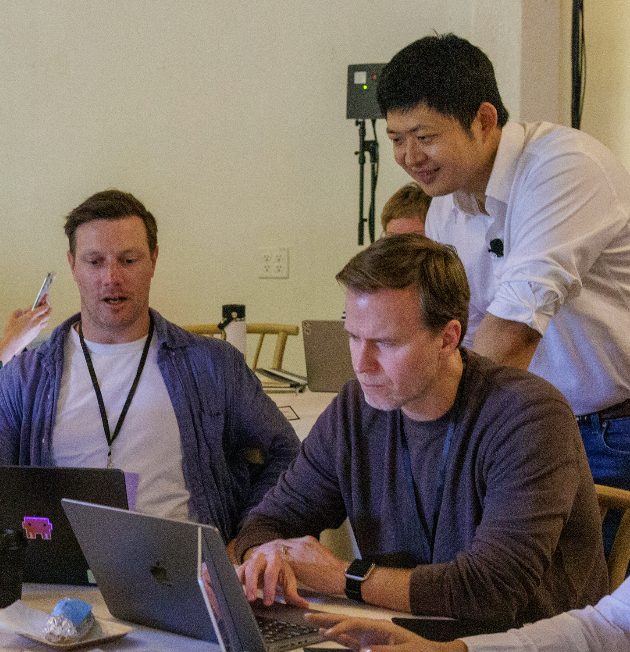
Executives are far more capable at this than many people assume, and often more capable than they assume themselves. Nobody in the room needed convincing that AI mattered. They needed the how.
One finance leader sat down expecting a chat window and an hour of typing. I showed them artifacts instead: the output lands as a document, spreadsheet, or deck you can edit and hand off, not a paragraph trapped in a chat thread. They barely looked up again. By the end of the hour, they had built a review using their own numbers and were asking how to put it on a schedule. Nobody taught them prompt engineering. Someone showed them where the work goes.

The people who stalled were rarely stuck on what they wanted to build. They were stuck on what to type. The question that unstuck them was not "what are you trying to do?" It was "what did you tell it?" Then: paste in the real document, not a description of it. That was usually enough.
The gap between "AI isn't for me" and "I built this" was one hour and one demonstration. The capability was already in the room. What was missing was a mental model for where the work goes, what the agent does, and who decides.
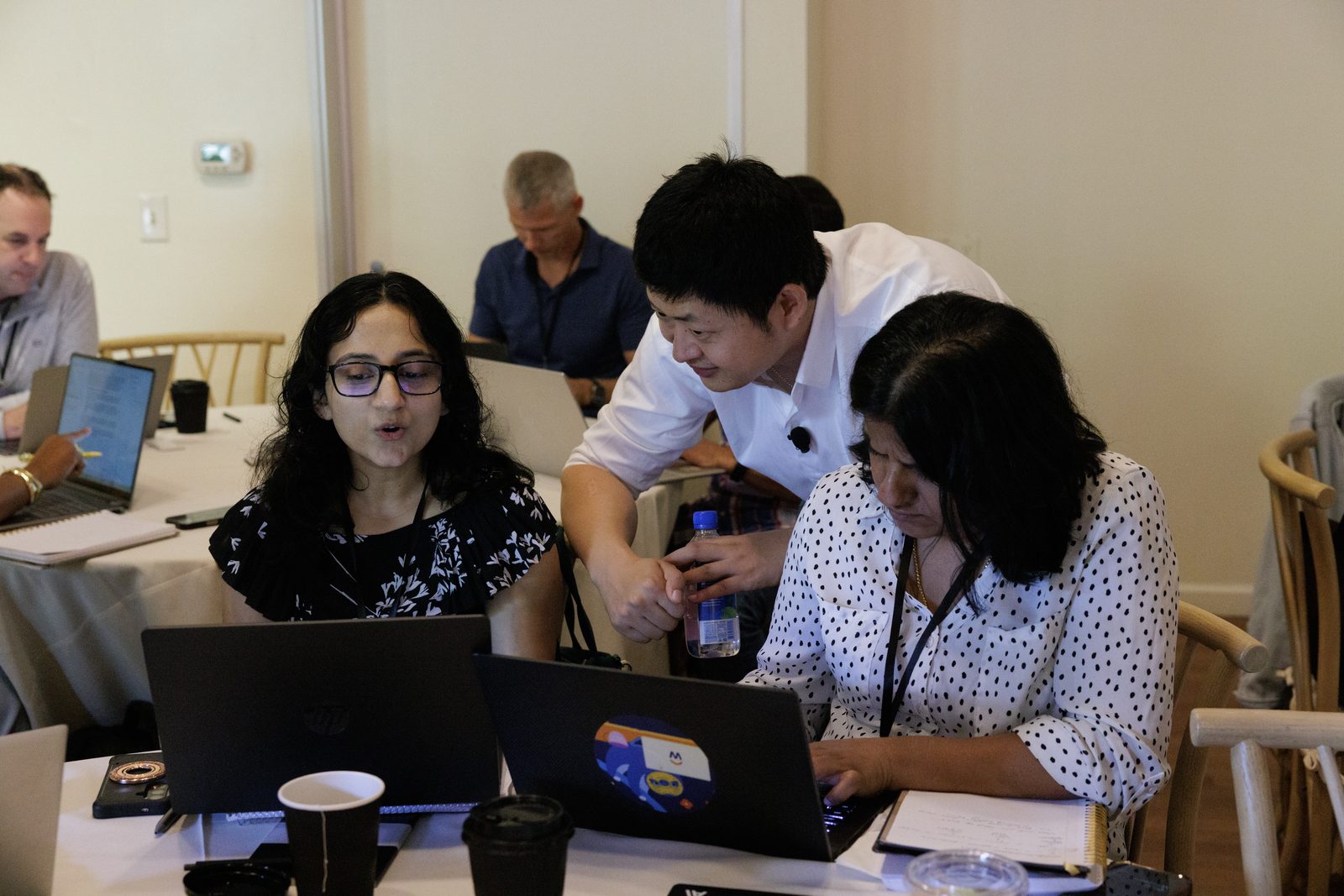
The transformation itself takes real work. But the shift in how people see the technology can happen fast. Once they can see where AI fits into their own work, the question stops being whether they can use it and becomes how far they can take it.
What will you hand off first?
When the board asks for the AI strategy, the answer for the middle box is simpler than most companies make it. Pick the functions that run on repeat. Brief them well. Decide on what comes back. Make the second time free.
Some of this is technical. But all of it is management. Pick one task your team repeats every week. What will you hand off first?
I work on Anthropic's Applied AI team, but the views here are my own and do not represent Anthropic. Cowork is our product, and nothing here is a commitment to future functionality.